Michael B. Jordan
Bryan Stevenson

An independent editorial film guide
A measured look at the 2019 legal drama, its portrayal of wrongful conviction, and the people whose work shaped its story.
01 · The story
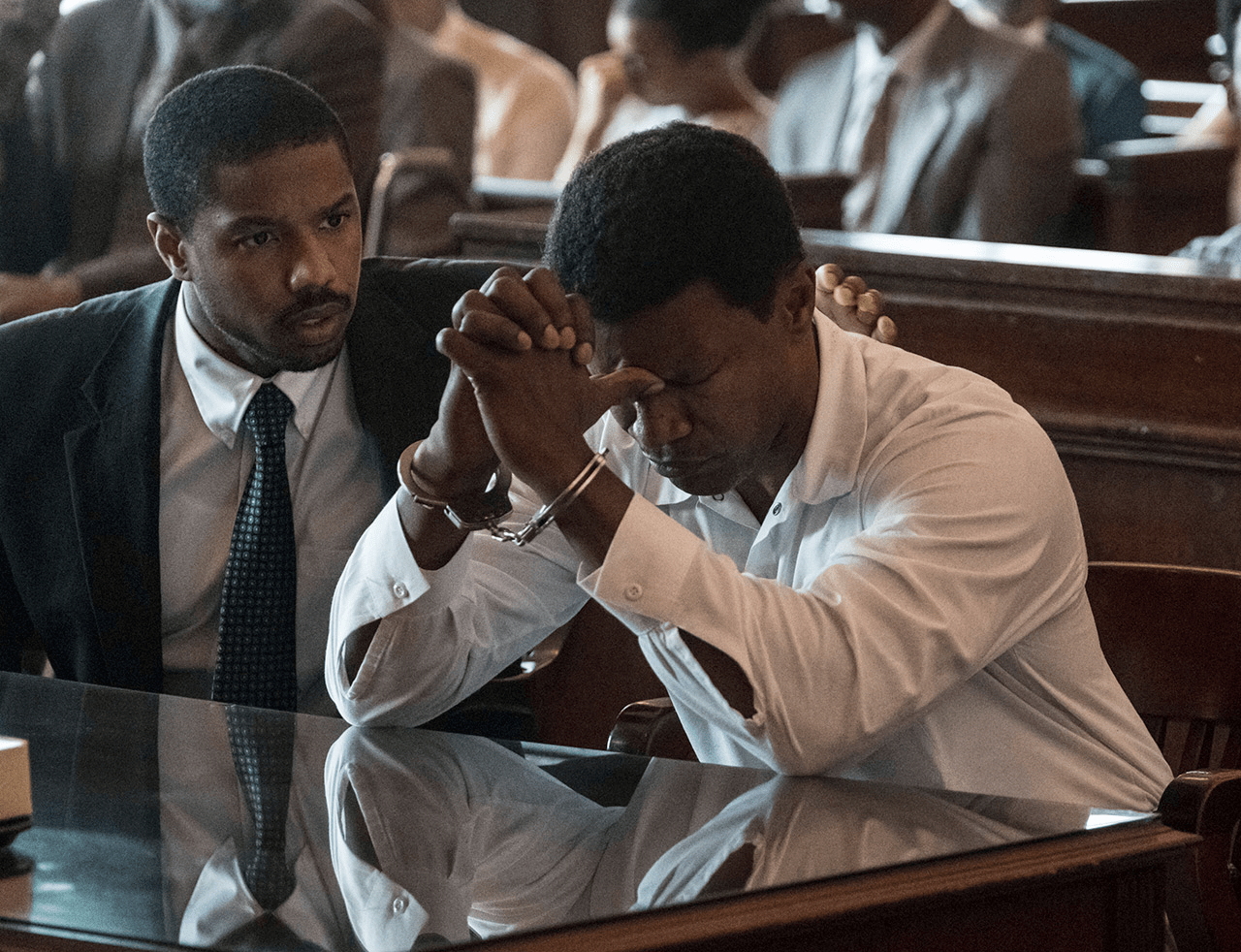
The film follows a young attorney who travels to Alabama and takes on the case of a man sentenced to death despite serious questions about the evidence used against him.
Based on Bryan Stevenson’s memoir, the narrative centers on his early legal work and his effort to secure a new hearing for Walter McMillian. The case unfolds through records, witness accounts, institutional resistance, and the persistence of a defense team seeking careful review.
Rather than presenting justice as a single courtroom revelation, the film depicts it as sustained work: listening to families, examining inconsistent evidence, challenging unreliable testimony, and insisting that every person receive due process.
02 · Cast and characters
The performances frame the case through legal advocacy, incarceration, family experience, and the pressures surrounding a contested conviction.
Bryan Stevenson
Walter McMillian
Eva Ansley
Anthony Ray Hinton
Herbert Richardson
Ralph Myers
Tommy Chapman
Henry Davis

Evidence and procedure
The drama emphasizes records, corroboration, witness reliability, and access to meaningful legal review rather than easy certainty.
03 · Themes
Its central concerns extend beyond one case, inviting attention to fairness, representation, public institutions, and the human cost of error.
The story asks what meaningful review requires when a conviction rests on disputed evidence and testimony.
It considers how access to prepared, sustained legal advocacy can shape a person’s ability to challenge the state.
The film addresses how racial prejudice and local pressure can affect investigations, charging decisions, and public judgment.
People in custody are portrayed as individuals with relationships, fears, histories, and a continuing claim to humane treatment.
Legal change appears not as heroic certainty but as disciplined work sustained through setbacks and resistance.
The consequences of incarceration reach families and communities as they navigate absence, uncertainty, and public scrutiny.
04 · Production background
The screenplay adapts a nonfiction memoir into a focused feature narrative. It concentrates on McMillian’s case while drawing on the book’s broader account of legal advocacy and incarceration.
The filmmakers balance courtroom procedure with quieter scenes involving clients, relatives, and colleagues. This structure gives the legal arguments personal stakes without treating the underlying events as spectacle.
As with any dramatization, scenes and timelines may be condensed. Viewers interested in the historical record should distinguish the film’s narrative construction from primary documents and independent reporting.
05 · Social context
The film belongs to a wider public discussion about wrongful convictions, capital punishment, legal resources, and accountability within criminal courts.
Appeals and post-conviction review can reveal unreliable testimony, withheld information, inadequate representation, or evidence that was not properly tested.
Because the penalty is irreversible, the accuracy of evidence, quality of counsel, and fairness of procedure receive heightened scrutiny.
The narrative places McMillian’s prosecution within longstanding concerns about unequal treatment and the effect of racial bias on legal outcomes.
The work shown includes investigation, client communication, records review, motions, hearings, and long-term support for affected families.
06 · Critical perspective
Discussion of the film has often centered on its committed performances and accessible presentation of complex legal issues.
The film works most effectively as an introduction to the human consequences of contested convictions. Its conventional dramatic structure makes the case legible to a broad audience, while the ensemble keeps attention on the people affected by institutional decisions. This is an independent summary, not a viewer rating or reproduced review.
Our editorial method
We separate film description from historical context and write with care around cases involving incarceration and capital punishment.
Establish the film’s credits, source material, setting, and central narrative.
Explain the legal and social ideas necessary to understand the story.
Keep dramatized storytelling separate from the broader historical record.
Update language and presentation for clarity, relevance, and respectful treatment.
Reader guide
Concise answers about the film and this independent resource.
Yes. It draws from Bryan Stevenson’s memoir and centers on his legal representation of Walter McMillian. The feature uses dramatization and narrative compression.
It follows efforts to challenge McMillian’s conviction while examining legal representation, unreliable evidence, racial bias, incarceration, and institutional accountability.
No. It provides calm summaries rather than reproducing testimony, legal documents, interview wording, or other source passages.
The guide includes a story overview, principal cast and characters, major themes, production background, critical perspective, social context, and editorial methodology.
No. Mercy Film Story is an independent informational resource and has no official affiliation with the film, its creators, cast, distributors, or depicted organizations.
No. A feature film and an editorial overview cannot replace case records, scholarly work, or carefully sourced reporting. They can provide an accessible starting point.